
We have an inherent tendency to label and scrutinize things, nothing can just be. From personality types to weird fetishes, we are forever cataloguing humanity. This activity of compartmentalizing, though divisive, allows different group sets to coexist. Psychologically too, we section our minds so that we don’t spiral into a whirlpool of dissonant thoughts and ideas. But what is to be said about the sectioning of societies and communities? They don’t align with the reasoning of propagating co-existence, in fact they do just the opposite.
What began as questioning this need to mentally delineate everything slowly transgressed into a micro level concern for the way we build and hence the way we live.

Reflecting our actions in the socio-political interface, are the layouts of our very homes. We obsequiously compartmentalize our spaces, overlook the importance of the commons and try to thrive in isolation, which I realize is a problem of the privileged. As a conscientious person of privilege, what does one do when excess space starts being a problem as opposed to a lack of it? How much space is too much space, and how much too little for coexistence? After all, how much space does a person really need? At the core of it we’re all social beings irrespective of our surroundings and as social beings, we group together, we talk and scream and create noise. Collectively, we are capable of a lot, but keeping quiet isn’t one of them, or so I thought.
Being in lockdown for months on end has left an unsettling din, that of silence. In the words of Murakami- ‘Silence, I discover, is something you can actually hear.’ The conversations have been scraped clean off dining tables and traded online, with rooms and partitions aiding this new form of social isolation.
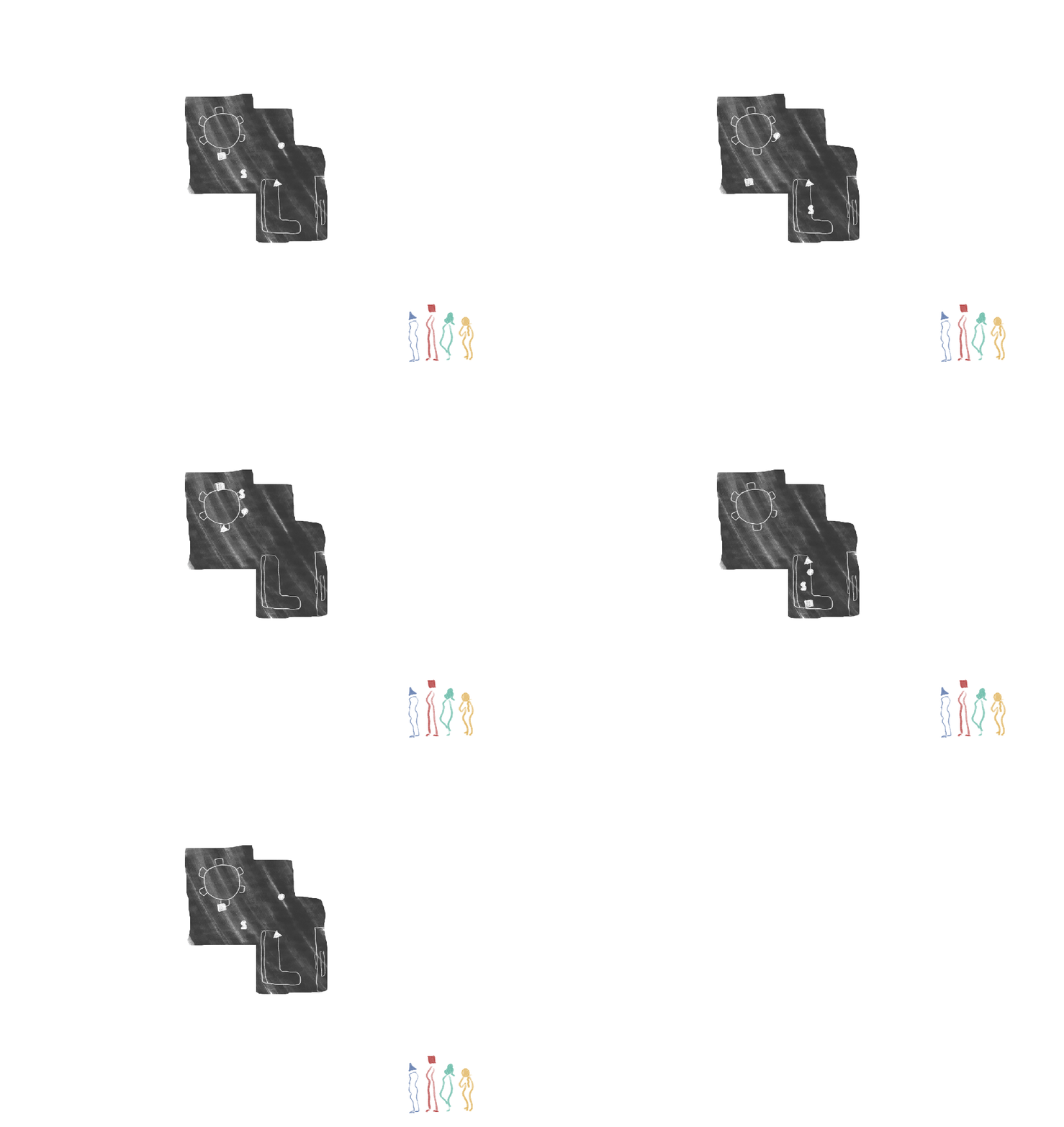
It isn’t the house plan that is to blame as much as our need to appropriate it in this particular way that’s problematic. How do we facilitate intersections in our life so we aren’t distanced by walls and doors. To understand the progression of events that led us here, I mapped how conversations or the lack thereof rooted itself in my home.
How much space do we need, before we talk again?

It was what we’d always done before the pandemic. We commiserated ourselves with this illusion. We are so centered around our little objects – more so now with everything going online – be it screens, gadgets or books. We hardly spend time with each other without the interface of technology or a meal. It’s unbelievable the extent, that technology has pervaded our intimate spaces – physically and mentally – that we are willing to stand next to an end table for hours because that is where the only other working electrical socket is situated. It is the proverbial fourth wall in the performance of our lives, making us onlookers to things happening all around us. Technology, however is only one factor; but it does force us to question ourselves, ‘How strong were our relationships really, if we let words on screens blot out words from the mouth?’
There has to be something that draws us out of this isolation. The more we slice up our personal spaces, the more we lose touch with what makes us a society. In the built environment, the smallest change in the construct and structure of our habitats can influence a lot, more than we imagine. Walking across the house to talk to a sibling is a start.
We are outcomes of connections and intimacy, and that cannot be erased from collective memory.
 namratanarendra.com
Leave a comment