
Role
Co-organiser and curator
Project Team
WELL Labs, Friends of Lakes, DCB Bank
Year
2024
Chintamani is one among many small towns that dot semi-arid peninsular India. The threat of water scarcity looms particularly during summers and the alternating drought years when there is inadequate rainfall and groundwater is not recharged as fast as it is extracted. The absence of a comprehensive planning approach for towns results in challenges for surface water bodies, natural drainage systems, and floodplains, which are vital components for ensuring water security and resilience. This is one of the reasons it is important to work towards rejuvenating existing surface water sources. This report documents our ongoing work in Chintamani to understand what is necessary to scientifically rejuvenate one of the lakes in the town – Mallapalli – so that it can be initially used as a community commons and subsequently address part of the demand for freshwater. By building a lake rejuvenation framework based on our work in Chintamani, we can take lessons from this exercise to other towns with similar concerns.
Context of Chintamani’s Water Situation
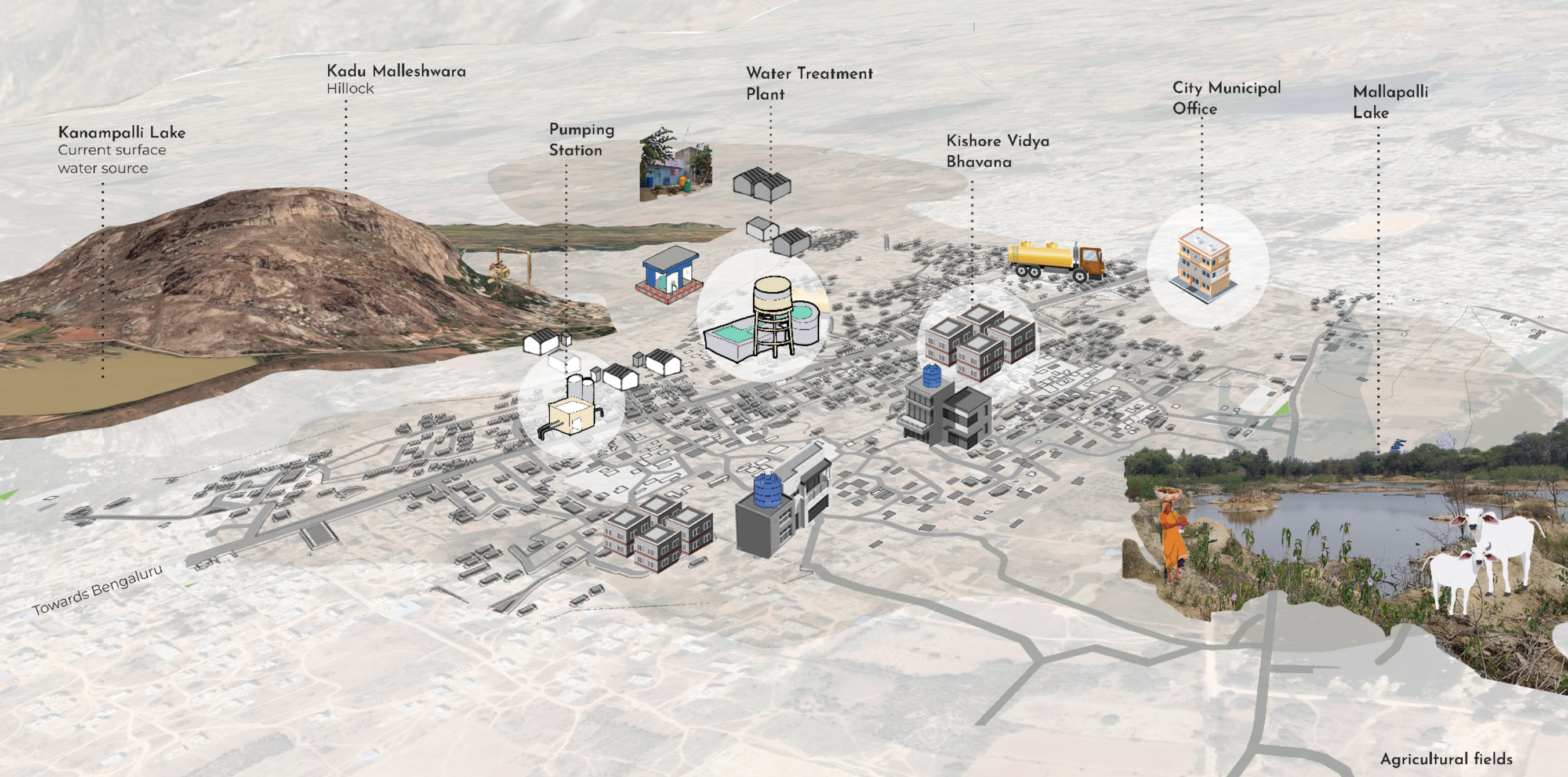
Chintamani is situated in the Deccan Plateau, about 75 km to the north of Bengaluru in Karnataka. The town lies towards the southeast of the state, classified as a dry agro-climatic zone. Its current population is estimated to be 92,802 (Source: Chintamani City Municipal Council).
Water supply, sanitation and waste management are responsibilities that lie with the town Urban Local Body (ULB), the Chintamani City Municipal Council (CMC). Within the CMC, the engineering section oversees water supply supported by field-level staff like the valvemen. Karnataka Urban Water Supply and Drainage Board (KUWSDB), a parastatal body responsible for planning and execution of water supply and sewerage projects, oversees operations and maintenance for a period before it is transitioned to the Chintamani CMC (Ramamoorthy et al., 2024).
Chintamani town’s drinking water demand is met majorly by groundwater and supported by two surface water sources.
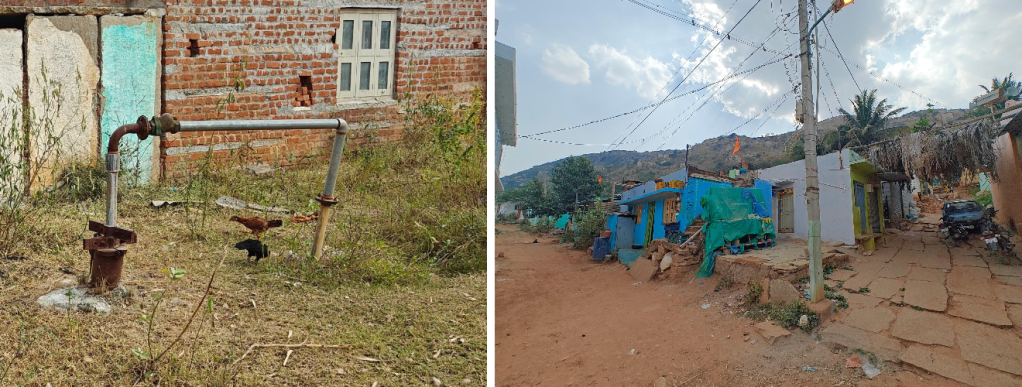
Key challenges faced by the town:
– Poor rainfall and lack of mechanisms to cope with this
– Over reliance on ground water which has caused an enormous burden on the underlying aquifer
– High non revenue water consumption is observed
– Inadequate capacity for sewage water treatment
– No systems in place for efficient surface water governance
Catchment and Lakes – Analysis

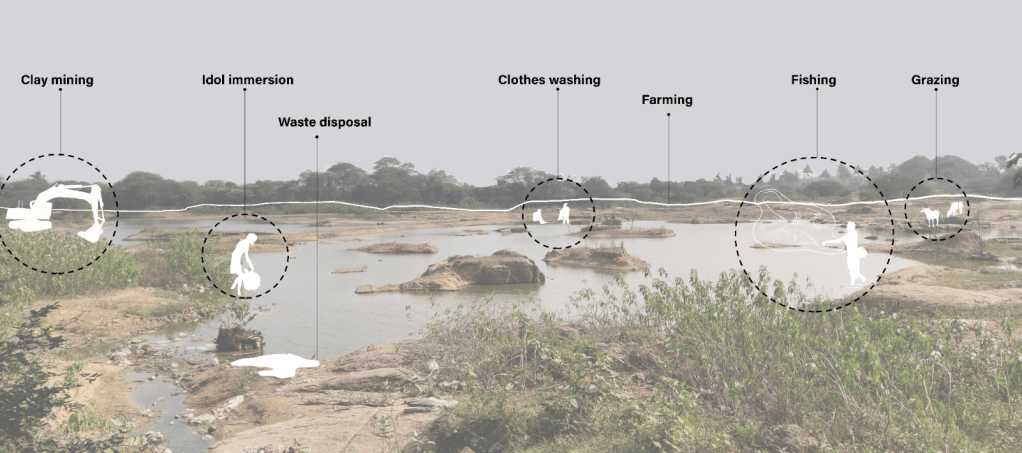
As a first step towards addressing the needs of the users and residents living around the lake, activities within the vicinity of the lake were mapped through interviews and observations. From conversations with farmers on the ground, it is understood that more than fifty years ago, Mallapalli lake held water that was used for consumption and it wasn’t a degrading environment as it is seen today. However, despite the reduced quality and quantity of the water in the lake, there are a number of activities that people depend on the lake for.
Lake visioning process
Historically, local communities were custodians of lakes within their areas and through collective ownership and maintenance of the lake, they formed a closely connected social-ecological system (Nagendra, 2012). The usual process for rejuvenation places the focus on the citizen groups. They are formally assigned the responsibility of managing lakes daily, which includes tasks like security, gardening, and solid waste management. Upon receiving control of the lake, these groups have the chance to engage the local community and encourage community involvement around the lake. This setup allows for community engagement and action around the lake, fostering a sense of ownership and stewardship among residents (Srinivasan et al., 2020).
In March 2024, with the support from the MLA, the project team held a lake visioning activity with the residents of Mallapalli and some of the other people who had been part of early discussions. Observations and studies from the catchment and the reasons for rejuvenating the Mallapalli lake and its advantages to the residents around the lake were shared with the group.

Read more here.
 namratanarendra.com