
Role
Resident Fellow, Organiser and curator
Collaborators
Utrecht University, Casco Arts Institute
Year
2023
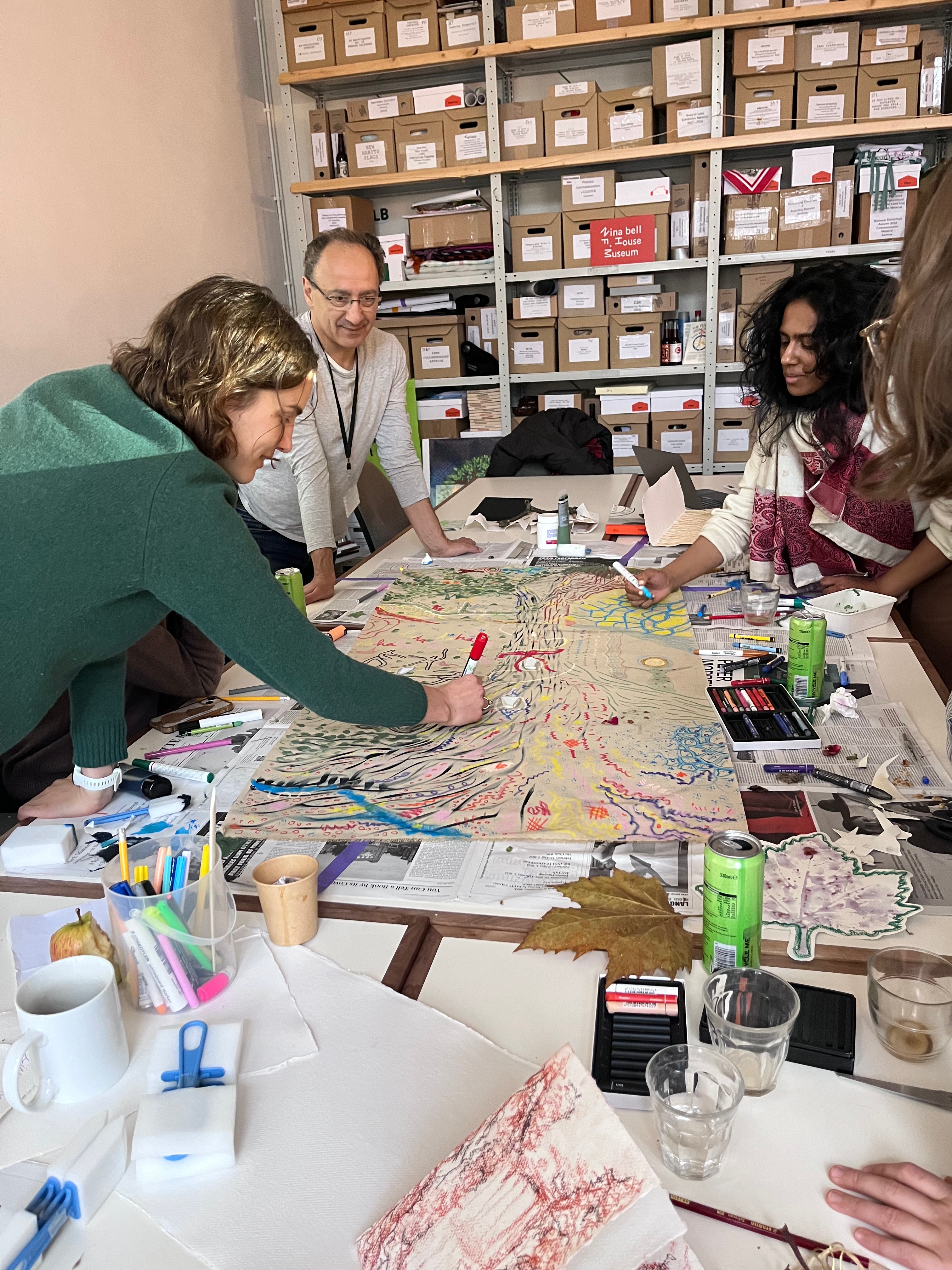
From November to December 2024, I was awarded the Critical Pathways Fellowship to expand academic discourse by amplifying more-than-human and marginalised lives and perspectives. During this time, I was hosted by Dr. Flora Roberts at the Department of History and Art History at the Faculty of Humanities. As a conclusion to my fellowship, I organised and facilitated a Collective Imaginarium Workshop: An explorative, hands-on, imaginaries activity through which we observed, questioned and expressed the historical, current and possible future relations between humans, other-than-humans and the site we were situated in, focusing on ‘invisible’ elements such as groundwater, soil properties, pipelines, insects etc. The differing backgrounds and perspectives contributed to a visual tapestry constructed and created with foraged elements from the site.
Over the course of two weeks, I also facilitated conversations around the question: How do we collectively weave together our compulsions, our emerging collaborations, contestations between non-human agency and our immediate natural and constructed landscapes? I hoped to nudge a creative tilt to the way we view research subjects and landscapes, basing it on my past work in social ecology and arts based grounded research methods.
Every region is replete with histories that are overlaid with infrastructures of the present, stratifying the landscape into temporally mixed ecologies. Palimpsest landscapes have been of interest to me since my time in architectural school. I recently wrote at length about the subject of my Bachelor’s thesis which is only now in the news due to its political relevance. It was an inquiry on how we understand palimspest landscapes that shape-shift in our collective memories and create new narratives over time. Documentation of these palimpsests can be diverse in their form- visual art, symbols, oral histories, written word, cartography, audio, film, virtual reality. But how do these representations capture the fluidity and dynamism of the various pathways of constructed human infrastructures in diversely speciated landscapes? Using this as a point of departure I presented a non-anthropocentric comparative dialogue of socio-environmental transformation in the Netherlands with the post-colonial landscapes of South India.
On a windy, chilly December morning in Utrecht, within the walls of Casco Art Institute, I had the opportunity to organise and host space for an imaginarium workshop. We spoke a little, walked a little, drew, sang and recited poetry and wondered about landscapes around us (especially during such inhumane times) and ones ahead of us in time – with warm colours and conversations.
I Context
I am here, you are here. We are where?
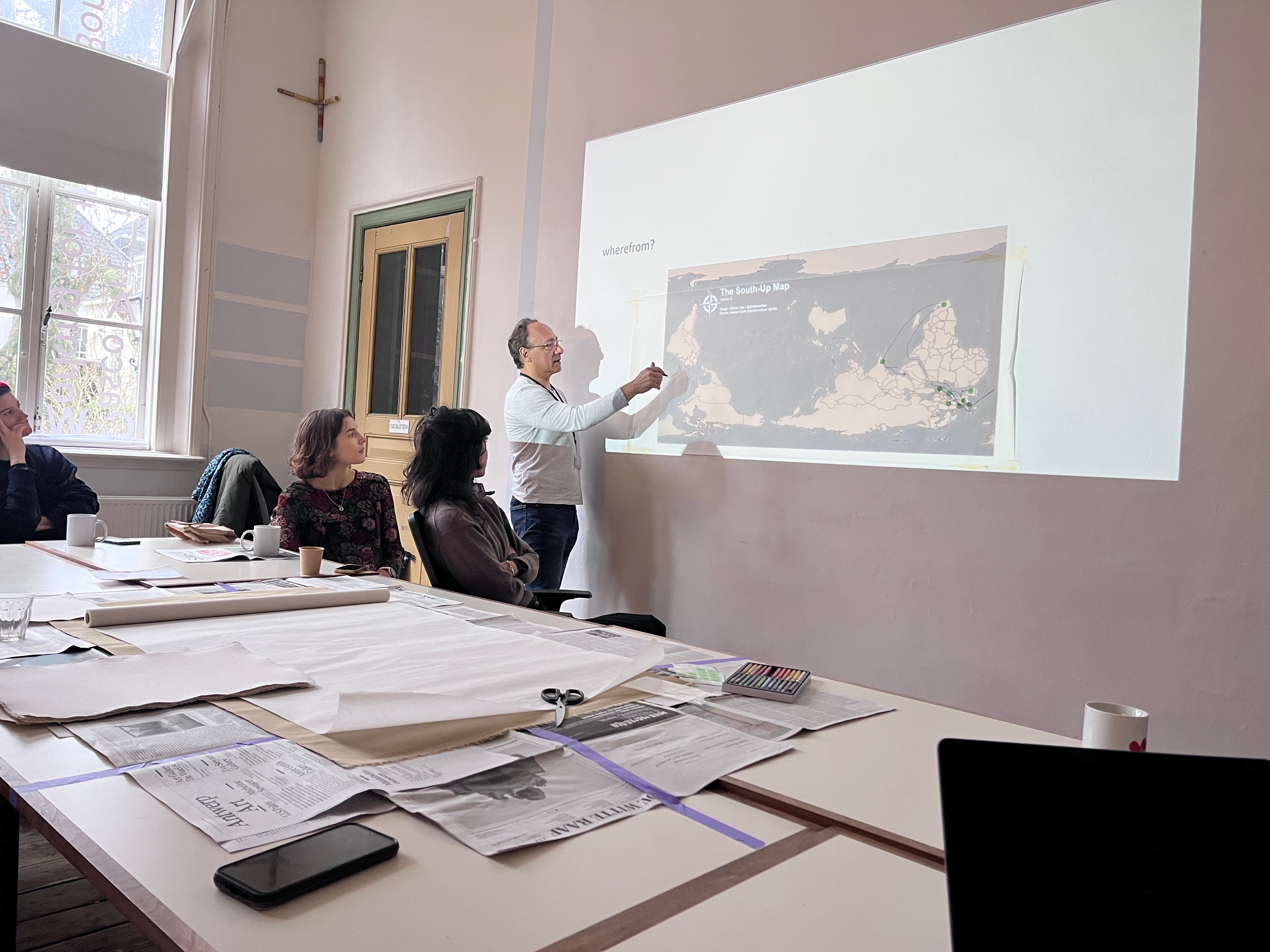
The workshop began with an introduction to where we were and the history of the Casco Art Institute and why it was important to acknowledge the past, present and futures of where we stood and deliberated.
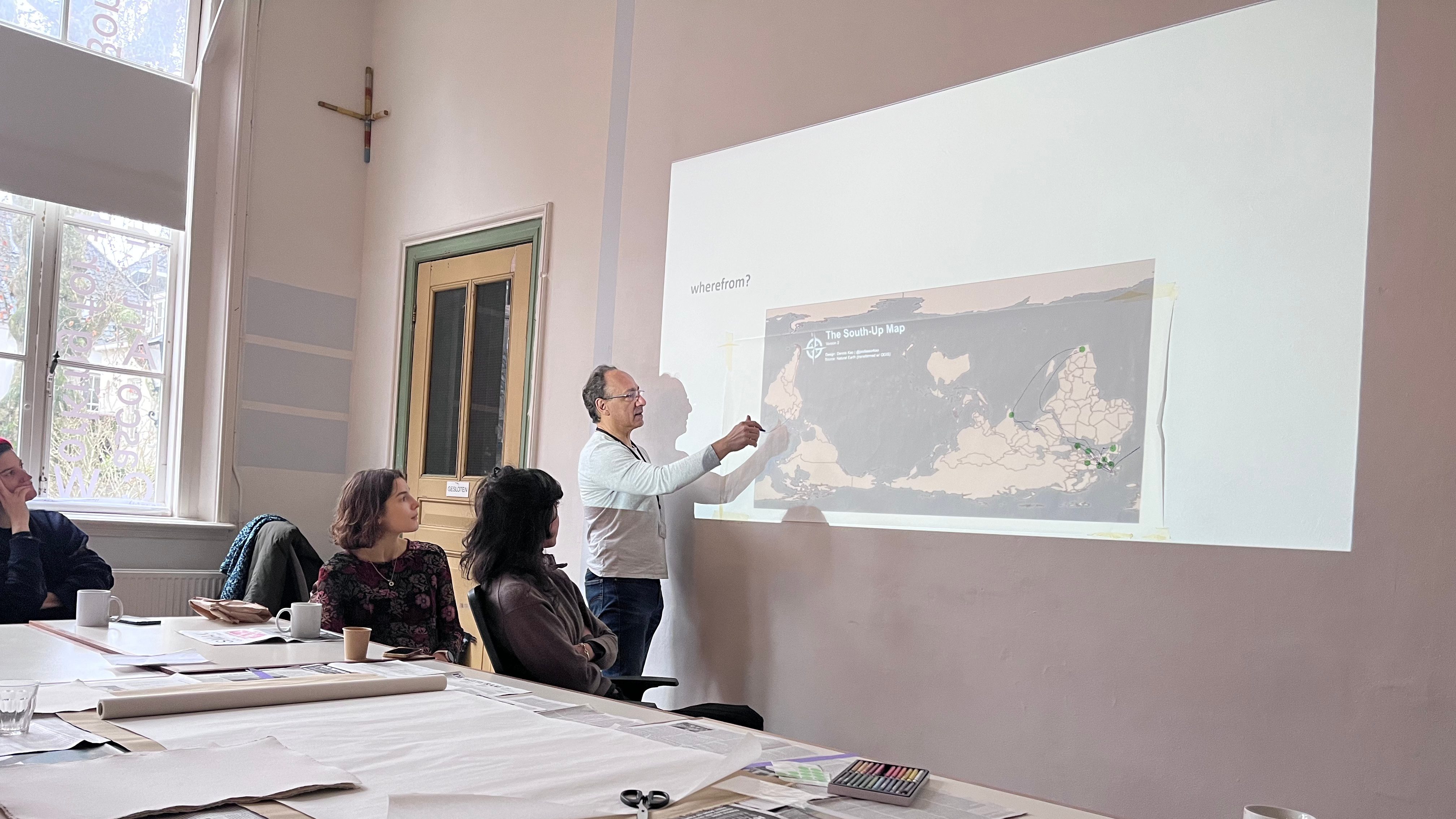
We used the South-Up map of our world to orient each other on where we come from
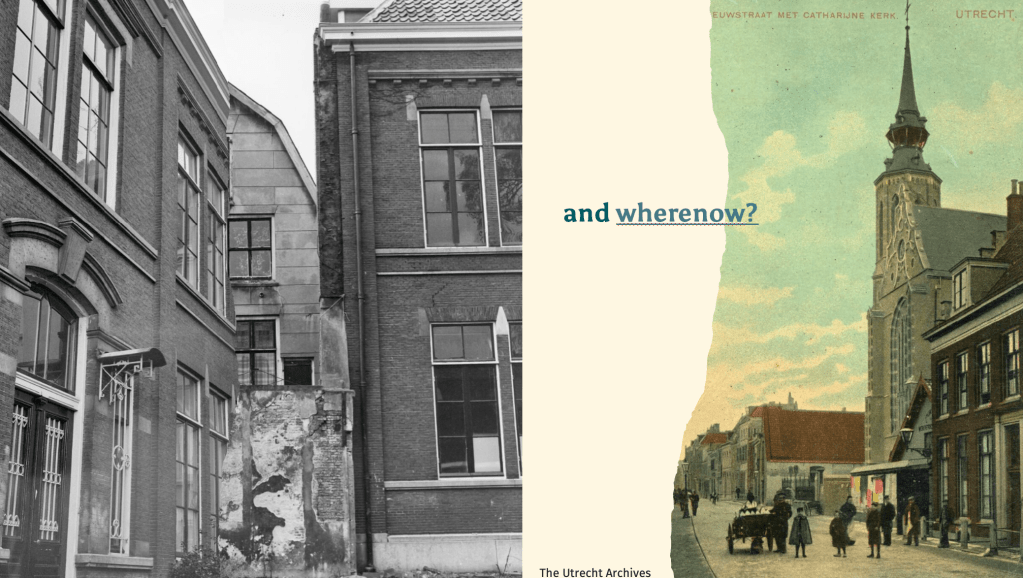
These images helped chart the story of Casco
II Speculative walking-with landscapes
“Imaginative fiction trains people to be aware that there are other ways to do things and other ways to be. That there is not just one civilisation and it is good and it is the way we have to be.”
— Ursula K. Le Guin, quoted in Worlds of Ursula K. Le Guin (Arwen Curry, 2018)
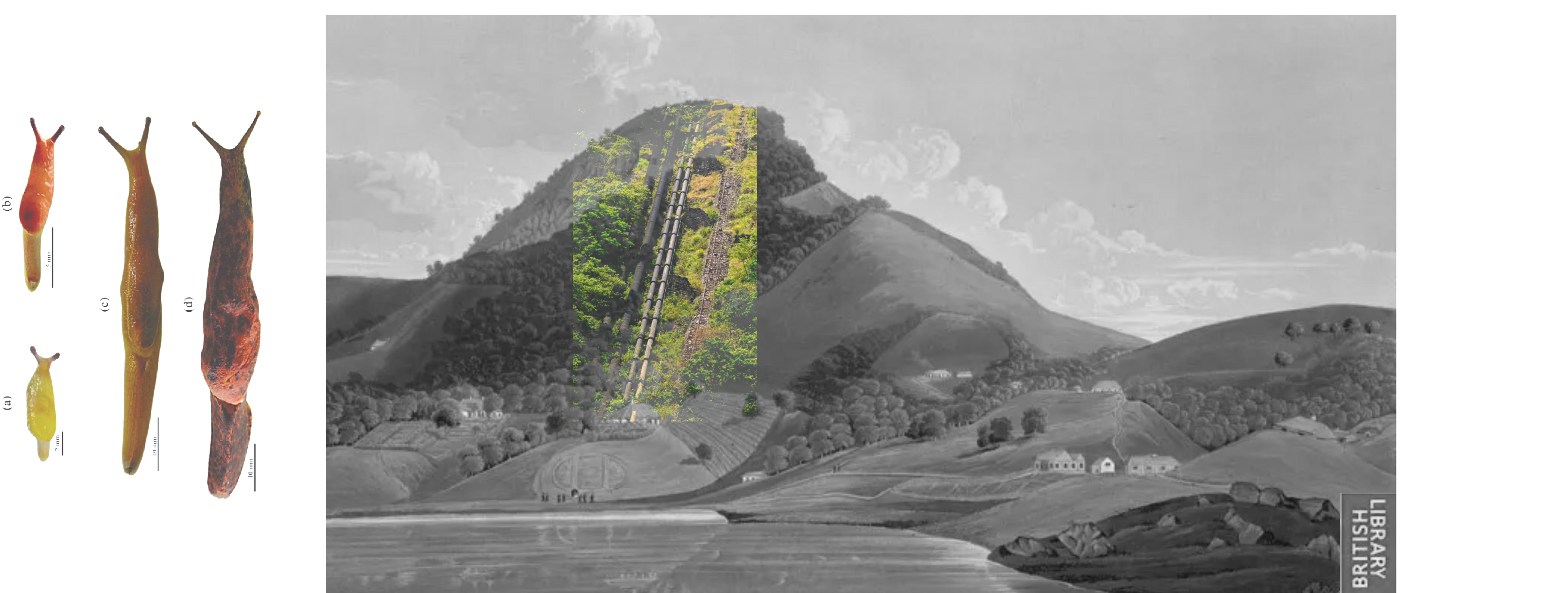
We then moved out to the neighbourhood for a speculative walking-with landscapes activity. Each of us took an hour to slowly walk around the area and observe things we normally wouldn’t – both natural and human-made. It is fair to say that the urban built environment doesn’t have much that humans haven’t intervened on, but that is exactly what we were trying to notice, to observe and witness. How do these lives entangle with ours, can we capture them through our photos, drawings and words? The invitation was also to see how infrastructure becomes conducive spaces for beings to thrive. I also shared videos of the Western Ghats in India. Here, pre-colonial evergreen grasslands had been converted by the British to tea plantations. These have significantly altered the soil properties and it’s water requirements. Installation of water pipelines, borewells and motors for drip irrigation of tea plantations have also introduced moisture into the landscape and with it an unplanned entry of diverse snails, some of which are being identified as harmful to horticulture and agricultural crops. These are beings that are not of the land but due to changes in the landscape have now found home.
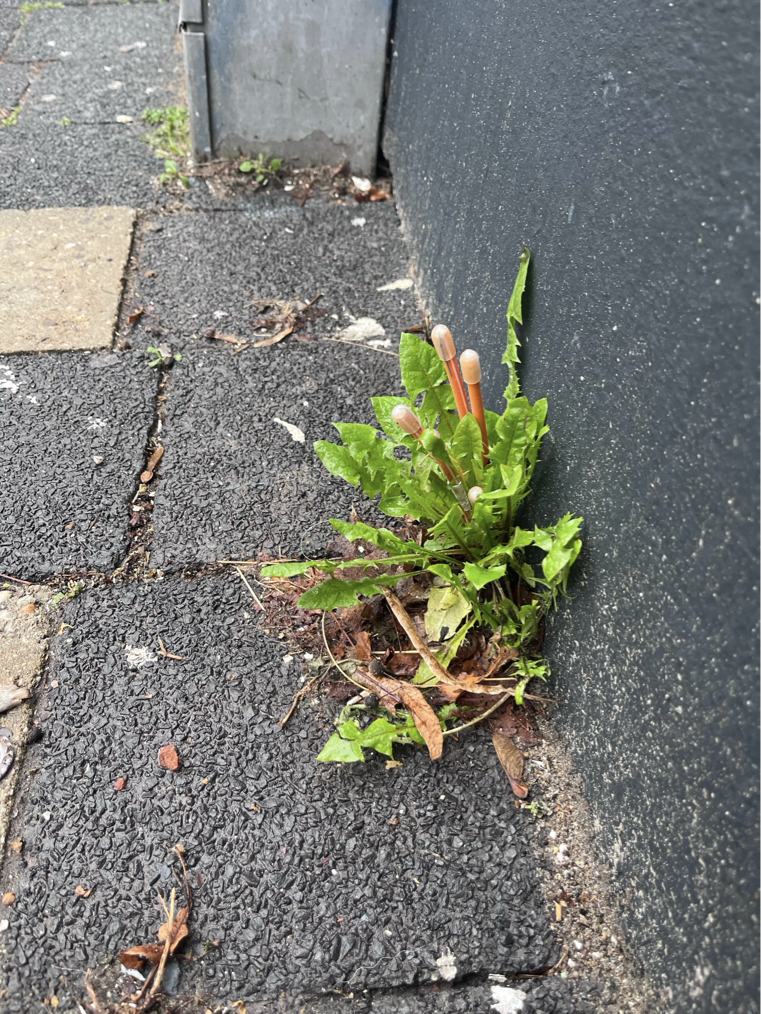
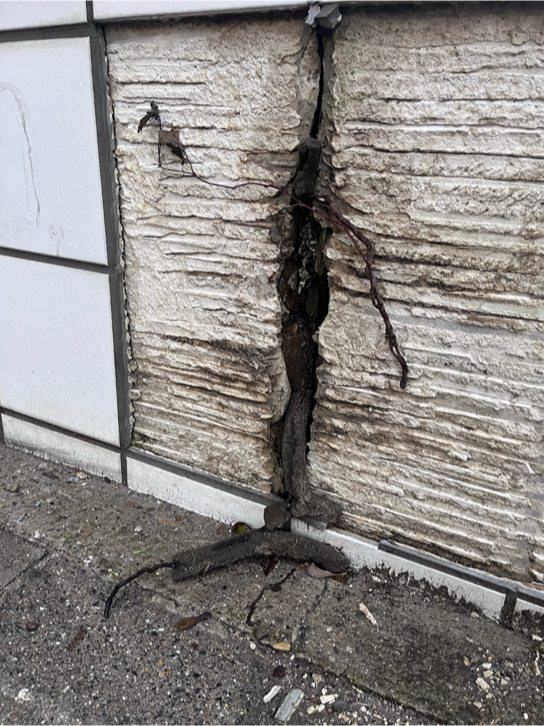
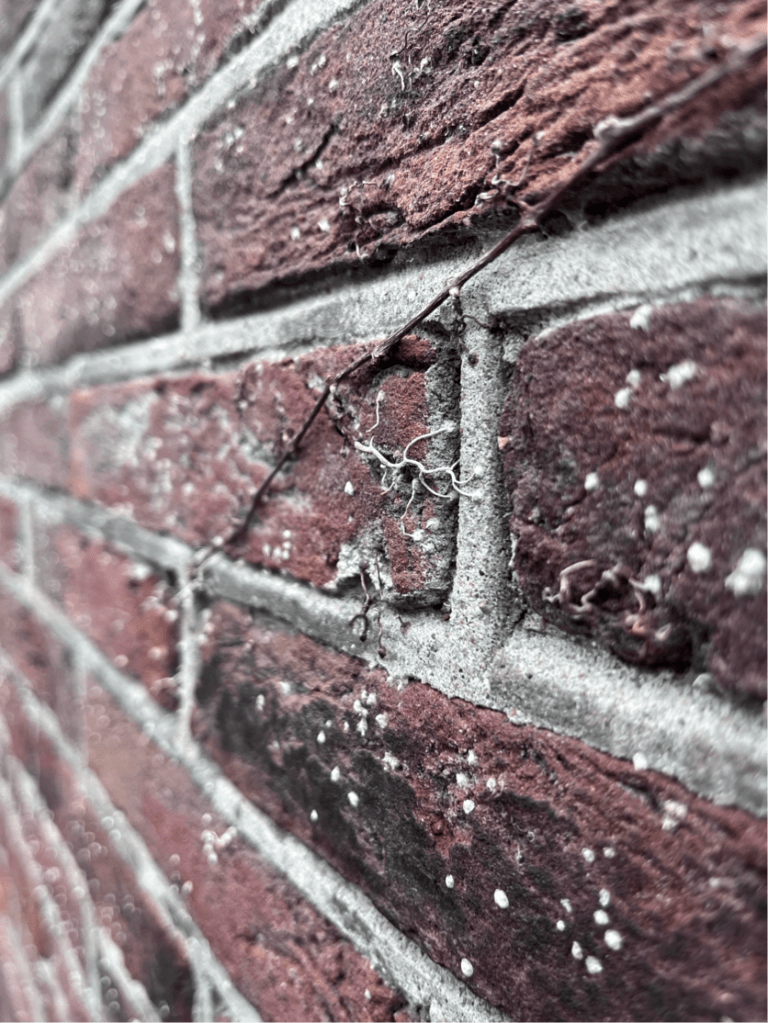
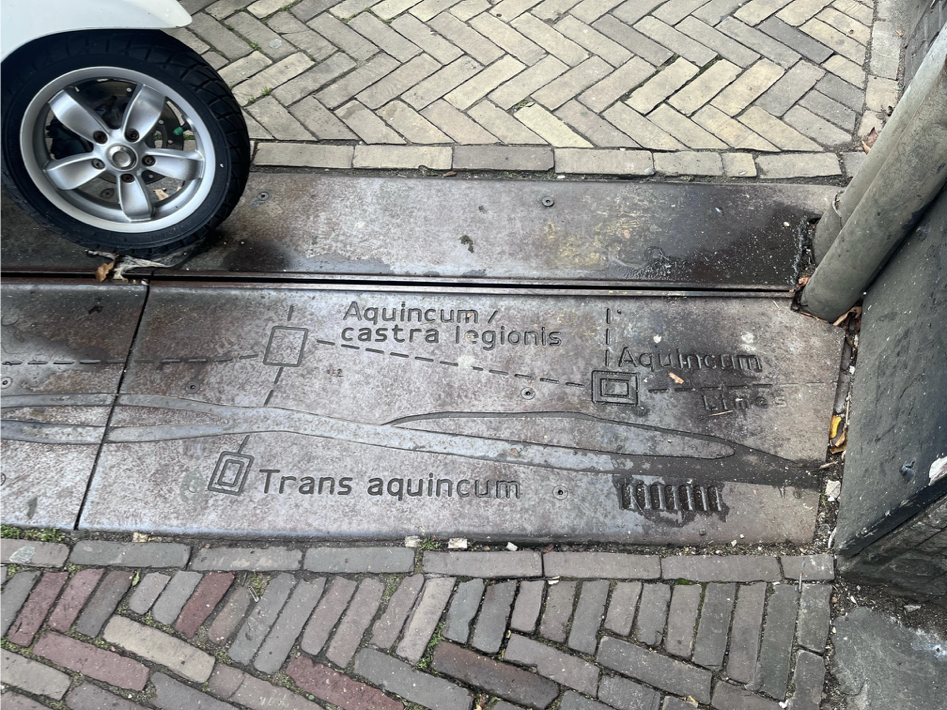
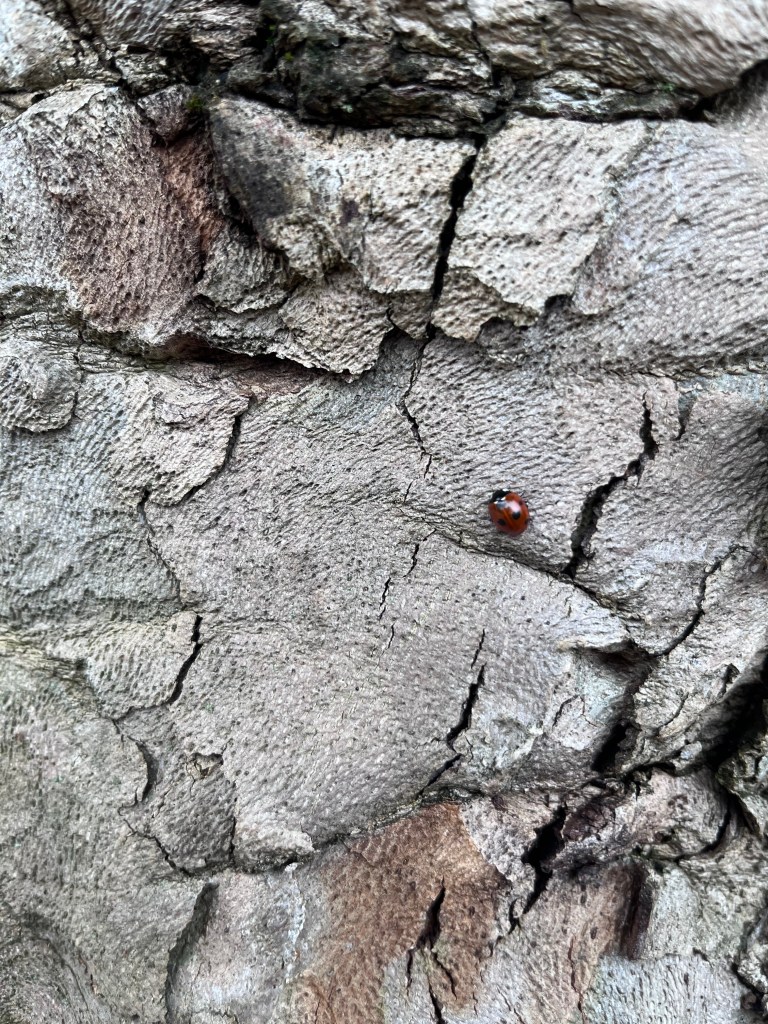
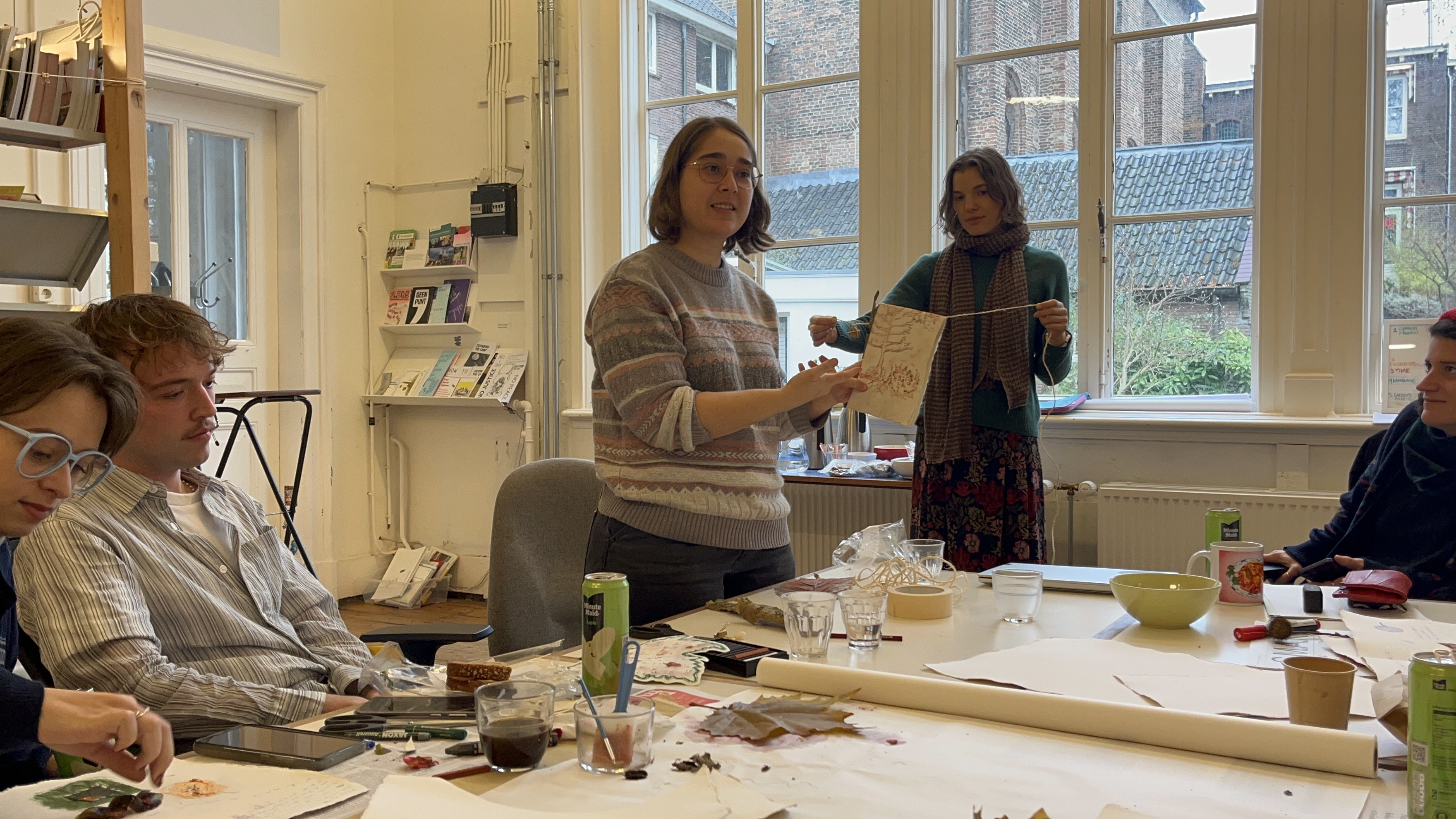
After the walk, we reflected on how we felt and how do we each communicate this outside of words?
While it is still us at the centre, how do we look at and beyond the mundane and banal “artefacts”. These were some prompts:
❊ What is my connection to this place?
❊ Who is here apart from me, lives and moves here, with me?
❊ What if your whole body were able to see this space?
❊ How can we be otherwise in this landscape?
Conceptualising the urban sensorial landscape in harmony with the more-than-human:
❊ How does this place connect to what is around it?
❊ What is their everyday?
❊ How do they move, where do they go, how are they seen, felt, heard; sensed? What are other ways to be?
“She appears almost entirely outside of narrative, as if standing outside of the river she enters it only transiently making a slight invisible movement inside of it.
A landscape hosts something.
She does not see through the geometrical optics of reflection.Brittle stars don’t have eyes; they are eyes, she thinks.
What if your whole body were able to see.”– Ada Smailbegovic in Descriptions of Invisible Objects
III Imaginarium
Reclaiming space, a work of solidarity, and an intention to rewrite the hegemonic narrative of our neighbourhood
Using the prompts and foraging from the morning, we collectively put it all together to create a tapestry of what our neighbourhoods could look, feel and sense like? How do we imagine beings-in-tension in the future. As Byrnes notes, how can we simultaneously speculate and introspect a narrative future that is both always unfurling and forever situated in the past?
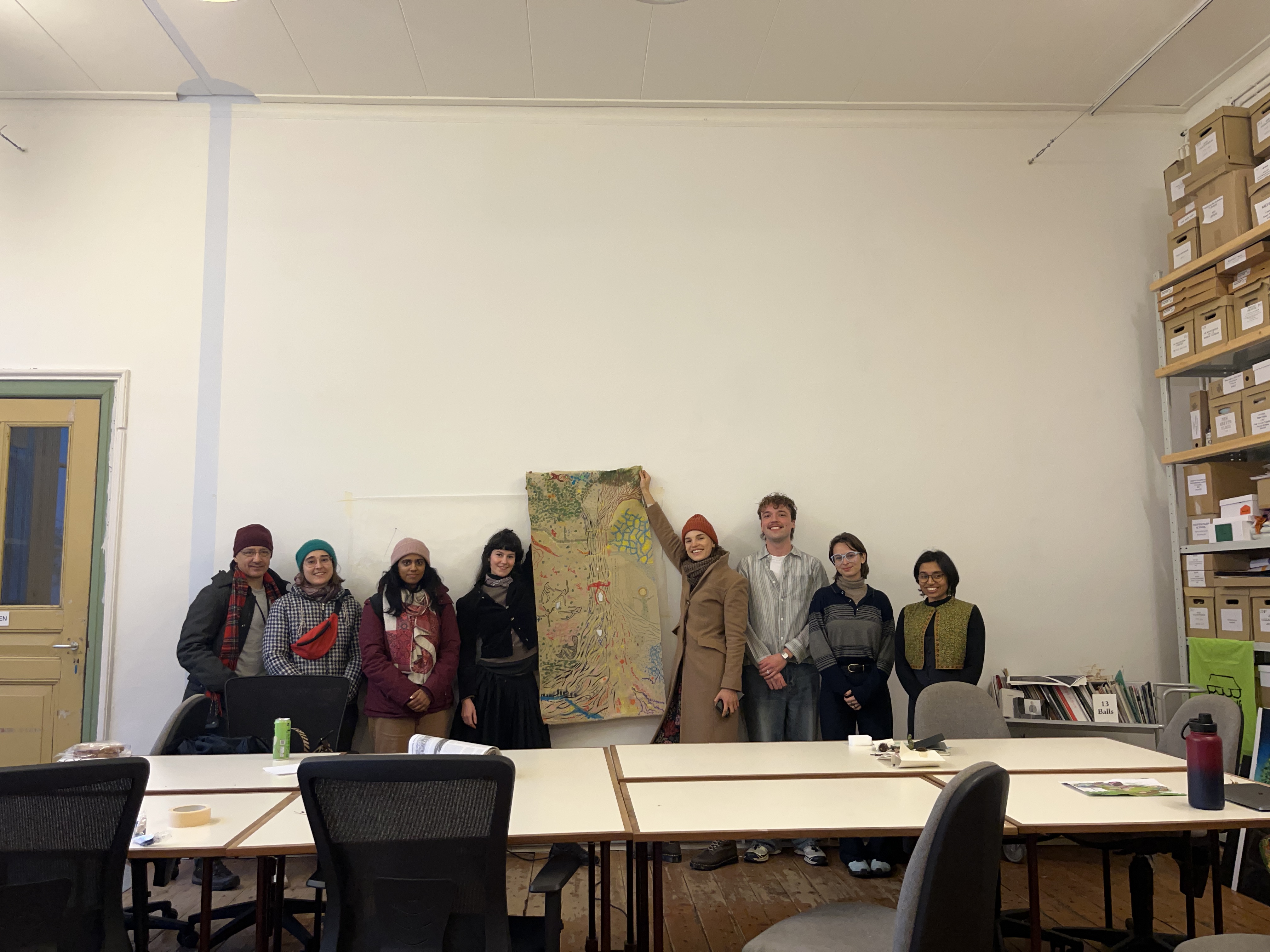
Thank you to Tom, Nina, Marianna, Flora, Susanne and all those who came for the workshop: Andrea, Anežka, Emma, Linu, Tim and Victoria.
 namratanarendra.com