
Role
Design and artisitc research
Collaborators
Community Design Agency, E[co]work, Resource Futures and Sofies
Year
2021
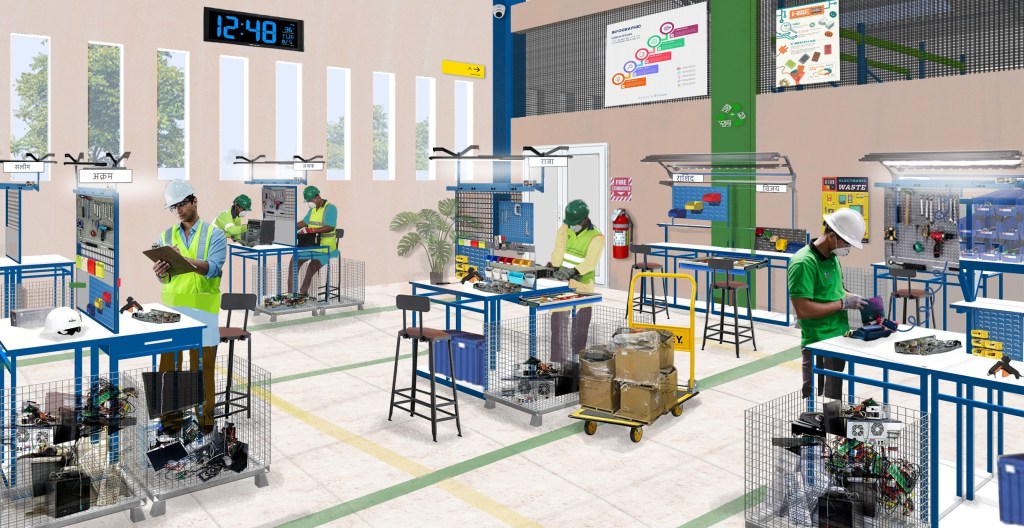
The E[co]work Association International (EAI) partnered with Community Design Agency and Resource Futures (from Summer 2020) to conceptualise and design a co-working space through a participatory and inclusive process. The process, initiated in late 2019, builds on engaging with micro-entrepreneurs in the e-waste recycling business in the early stages of the project implementation. This is to ensure a robust assessment of the demand for such a space in the market, adapt the concept to local needs and develop a network of potential clients for the E[co]work Space.
It is important to respect the micro-entrepreneurs and their community as equal stakeholders in order to bring favourable changes and introduce new tools in a sector that has been running informally for decades. A participatory approach allowed us to understand the complexity of the e-waste sector and particularly the hurdles faced by these micro-entrepreneurs. It also helped recognise the strong intangible bonds, connections, aspirations and motivations that eventually are able to inform a more inclusive design for a sustainable solution.
India is the 3rd highest producer of electronic waste (e-waste) in the world with 3.2 million tonnes produced annually. Out of which, only a small fraction of less than 10%
gets treated formally.
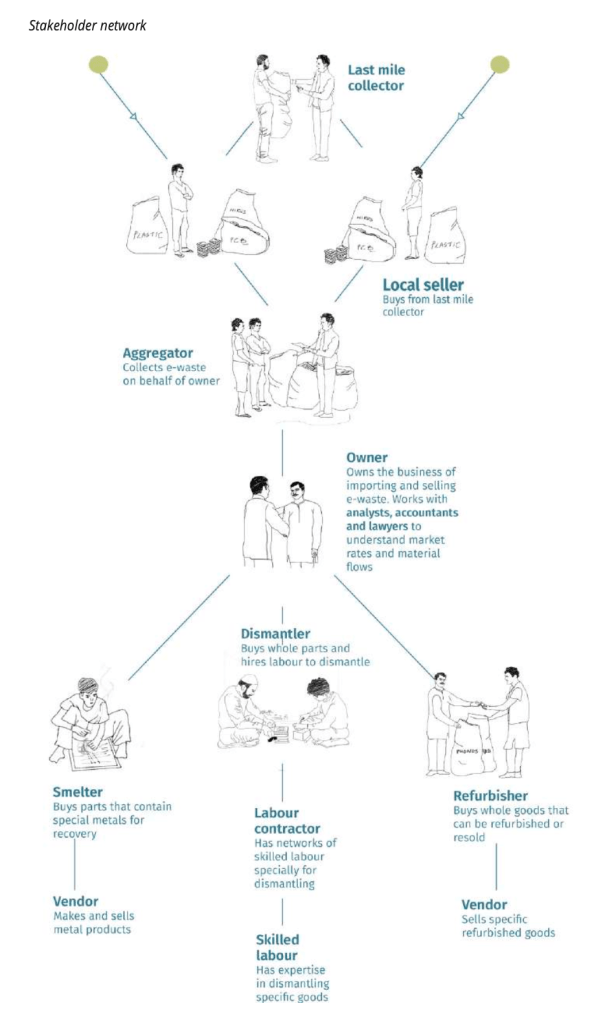
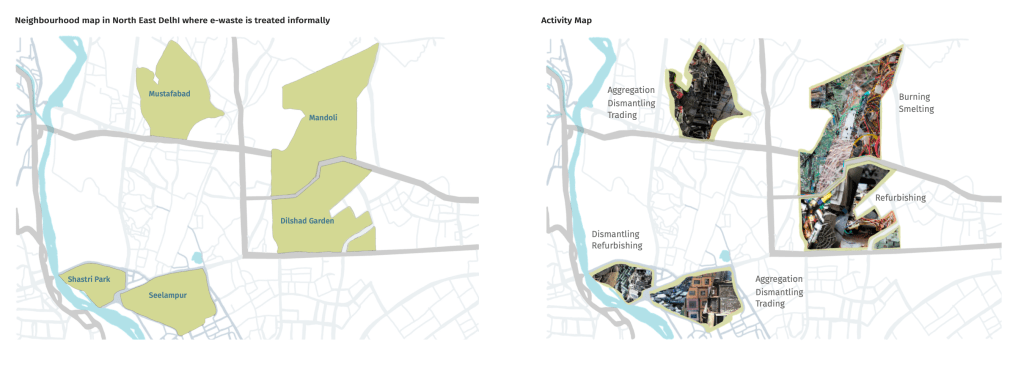
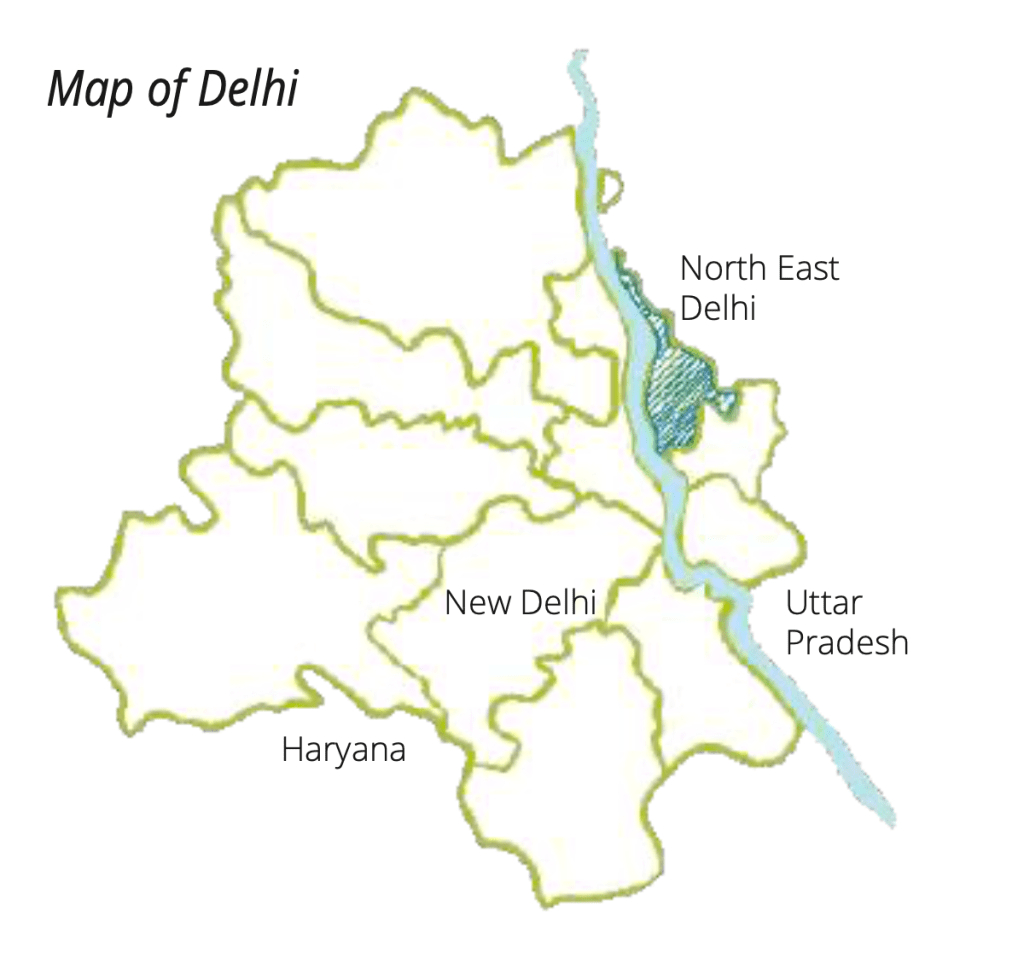
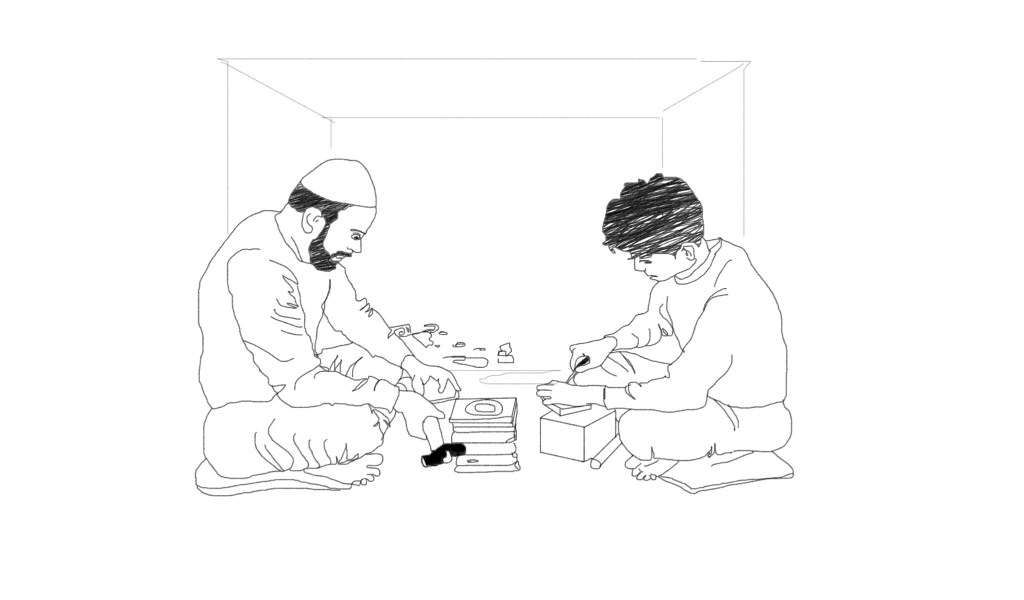
In and around metropolitan cities in India there are over 3000 units engaged in the informal sector for e-waste recycling. Large portions of these are concentrated in the North Eastern parts of Delhi in the neighbourhoods of Mustafabad, Seelampur, Dilshad Garden, Mandoli and Shastri Park, each with specific core activities. These include dismantling, smelting, refurbishing and trading that are operated informally by micro-entrepreneurs living in these areas.
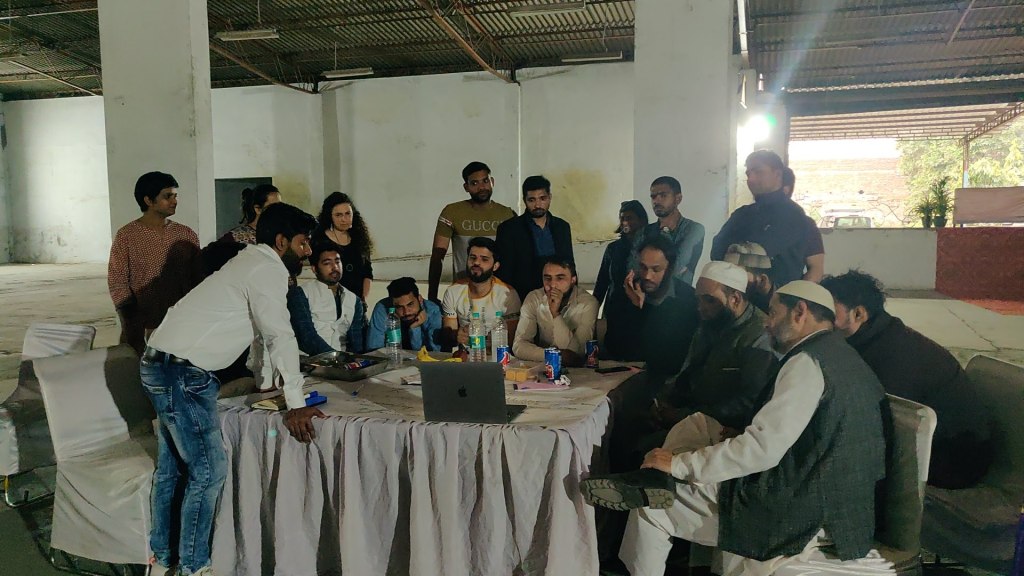
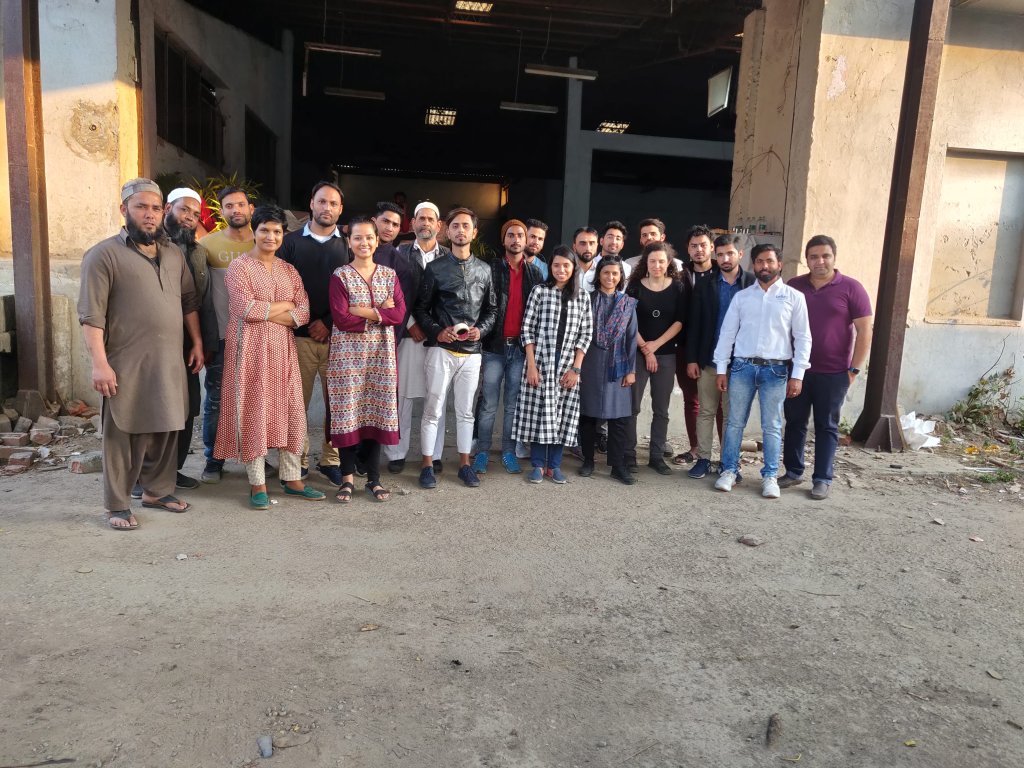
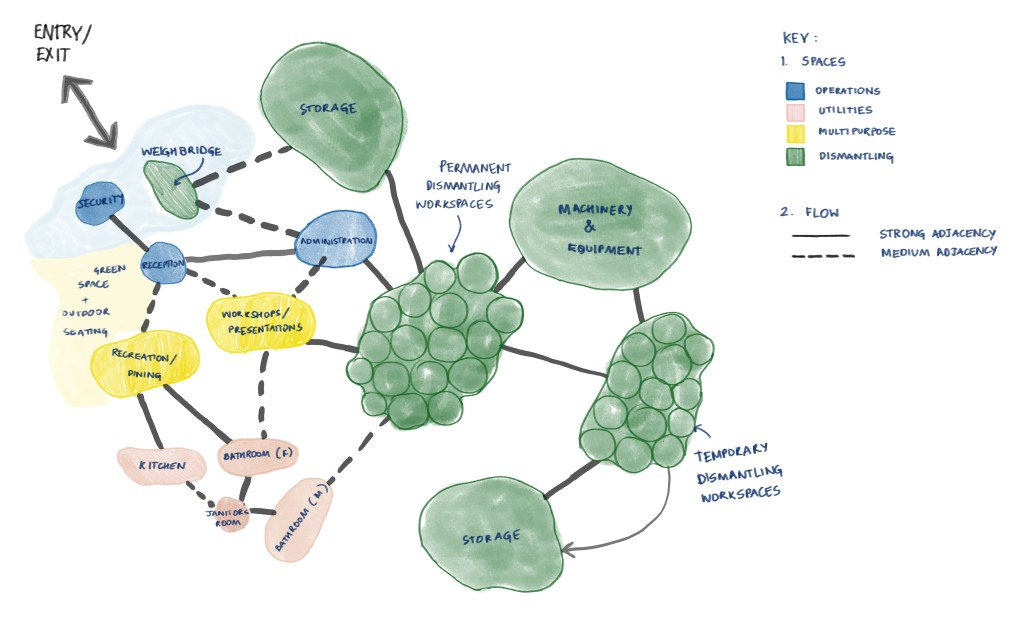
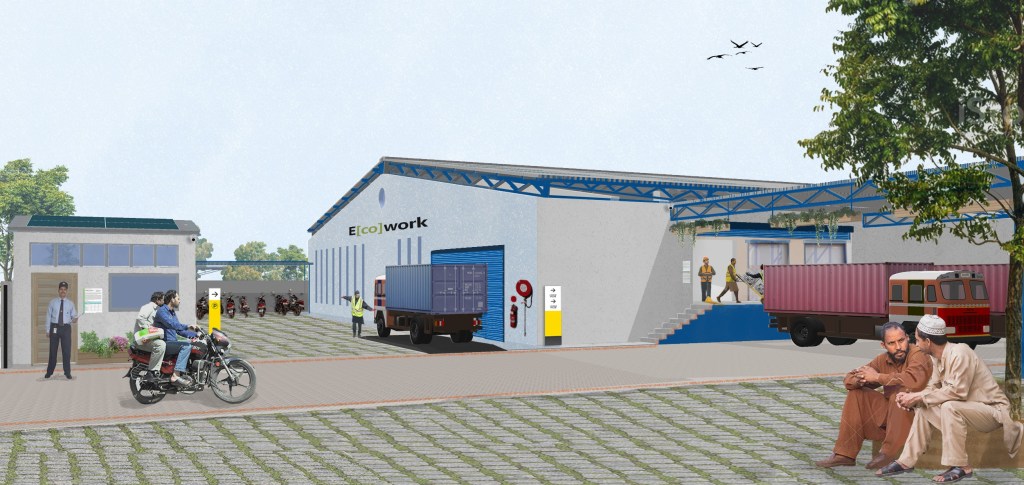
We held a design workshop at a warehouse unit with around fifteen e-waste dismantlers who had their own units. The design workshop was aimed to discuss the current issues faced by the dismantlers and we also facilitated a participatory group activity by asking the e-waste entrepreneurs to reimagine their workspaces. This was done using chalk and tape. The spaces ranged from prayer space to space for the RO, garden area etc. Using these insights we programmed spaces and visualised them to present to the e-waste entrepreneurs.
 namratanarendra.com